
.png)
elvah Report I.2025: Competition Intensifies as Charging Activity Rises Across Germany and Europe
Steady growth in Germany: charging sessions increase by around 16% compared to H2 2024
Rising competition: price campaigns, flexible tariffs, and dynamic pricing models emerge as key strategic tools
Strong international growth: Belgium (+45%) and the Netherlands (+41%) see significant increases in charging sessions
Essen, September 1, 2025 – The elvah Report I.2025, published today, once again provides in-depth insights into the public EV charging market. Despite ongoing uncertainty around e-mobility policy and a slowdown in new battery electric vehicle registrations, the German charging market continues on a growth trajectory.
A growing market: 689 GWh across nearly 29 million charging sessions
In the first half of 2025, both total estimated energy demand and charging activity continued to rise, reaching approximately 689 GWh across nearly 29 million charging sessions. This represents an increase of around 16% compared to the second half of 2024.
At the same time, the number of active charging points in Germany grew by 21% to more than 211,000 in the first half of the year. This confirms a broader trend: public charging is increasingly establishing itself as a core pillar of electric mobility.
Berlin, Bremen, and Hesse are driving growth, with increases between 19% and 21%. Hamburg remains the leader in charging sessions per capita, while North Rhine-Westphalia continues to represent the largest single market. Lower growth was recorded in Thuringia, Saxony, and Saarland.
Intensifying competition and new pricing models
EnBW maintains a clear lead in the fast-charging segment, followed at a distance by Ionity and Aral Pulse. Fastned and Ionity stand out for their strong utilization rates, making particularly efficient use of their infrastructure.
In the AC segment, municipal and regional utilities continue to dominate, complemented by a growing number of aggregators—providers such as vaylens and Ladeverbund+ that bundle and market charging points from multiple operators on a single platform without necessarily operating them directly.
Alongside continued growth, a key challenge remains: many locations still struggle to achieve economically viable utilization levels, further intensifying competition among operators. As a result, price campaigns, flexible tariffs, and early dynamic pricing models are no longer exceptions—they are becoming established strategic tools. More and more operators are experimenting with flexible pricing structures. For charge point operators (CPOs), optimizing both the technical and economic performance of their sites is becoming increasingly critical.
Europe accelerates
A look beyond Germany shows that momentum remains strong across Europe. Charging sessions increased significantly in the first half of 2025, particularly in Belgium (+45%) and the Netherlands (+41%). Nearly all analyzed markets show strong growth, underlining the growing importance of robust charging infrastructure across Europe.
The report also features expert insights to contextualize the data. Sebastian Henßler, publisher of Elektroauto-News.net and a well-known voice in the e-mobility sector, highlights key differences across European markets:
“With nearly one charging session per capita, Luxembourg is far above average—driven by clear government direction and a high network density.”
The Netherlands has reached a similar milestone, while Austria, he notes, shows a more regionally structured charging landscape.
Additional perspective comes from Christian Wagener, Managing Director & Partner in the energy practice at Boston Consulting Group. He emphasizes the success factors of leading operators, including strong partnerships with retail and parking operators, rapid local deployment with capable EPC partners, and a compelling customer experience.
Prices, locations, strategies: competition is heating up
Developments in 2025 will show whether competition continues to be defined by pricing, location, and brand. One thing is clear: operators will need to adapt their strategies—particularly pricing—more flexibly to remain competitive in a dynamic market environment.
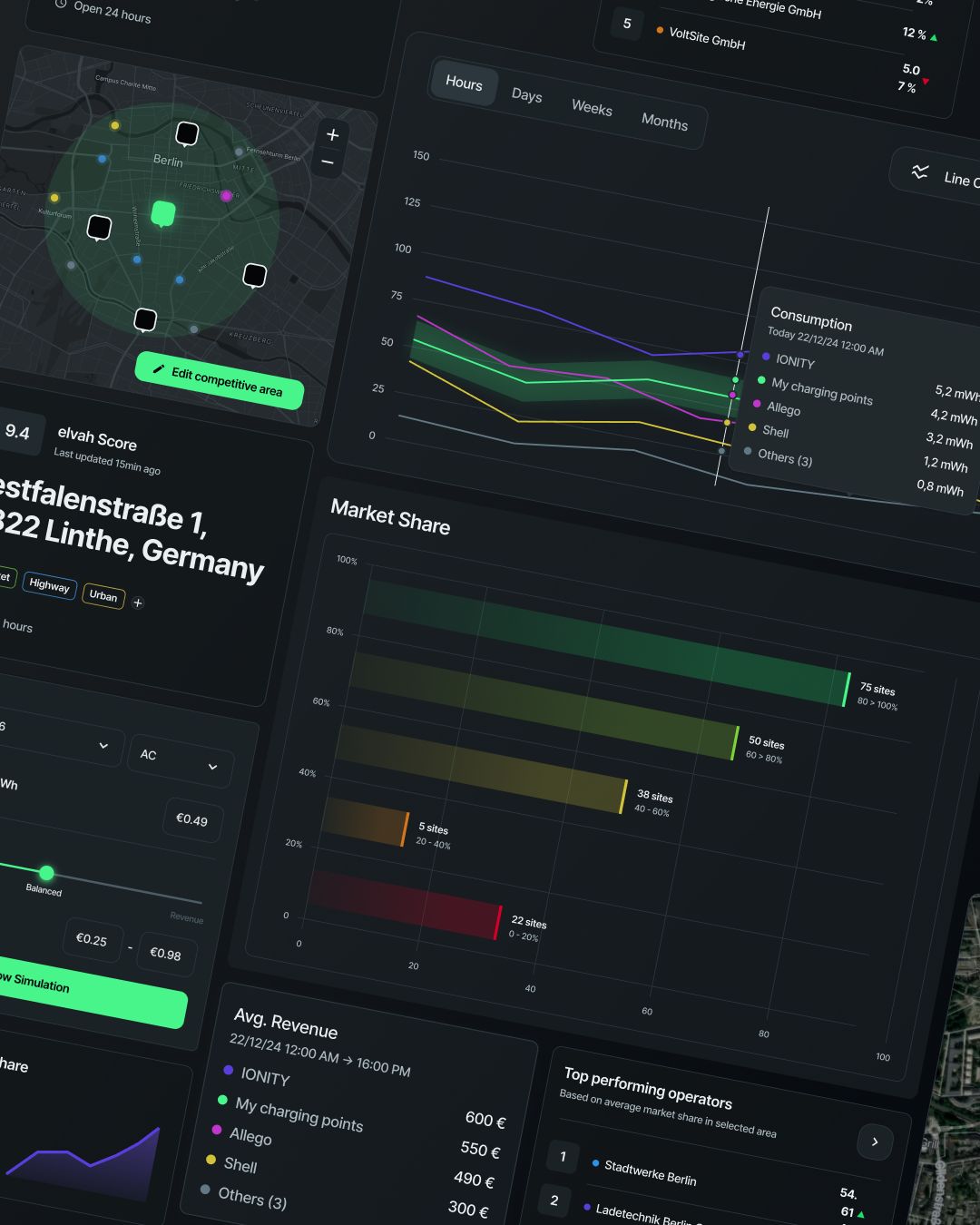
With the new elvah Market Monitor, an additional product will soon be available, offering continuous, data-driven tracking of market developments. It provides decision-makers in the e-mobility sector with an authoritative view of the current state of charging infrastructure expansion—down to the district level. The platform aggregates relevant German charging market data on a monthly basis, visualizes it, and makes it available for custom analysis and download.
“Despite political uncertainties, Germany’s public charging market has entered 2025 with strong momentum. The growing diversity of pricing models is particularly striking and could reshape competition. The key question will be how operators adapt their strategies to ensure sites remain economically viable,” says Sören Ziems, Co-Founder and Managing Director of elvah.
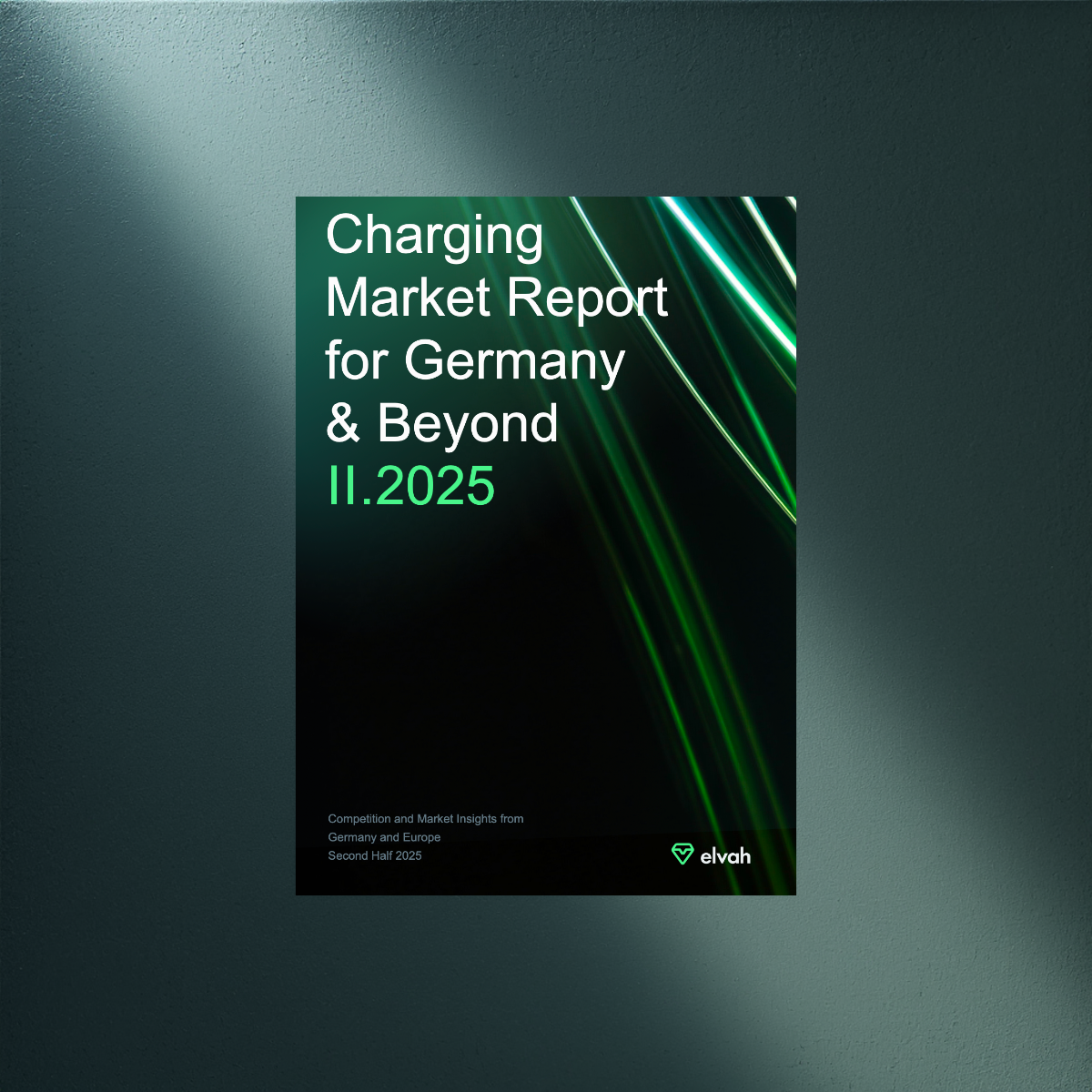
The full elvah Report I.2025 is now available for download via this link.
About elvah
elvah brings together data expertise for the EV charging market. The company provides real-time market data and actionable insights to enable informed, data-driven decision-making. The elvah Hub offers a centralized view of market developments and translates data into strategic recommendations—helping stakeholders systematically analyze infrastructure, interpret trends, and unlock optimization potential.
Explore more insights
Dive into the world of electric mobility with elvah! On our blog, we cover everything from the newest trends in EV technology to in-depth guides on sustainable travel and charging solutions.

.png)


.png)
.png)
.png)



%20(4).png)
.jpg)
